


Practice
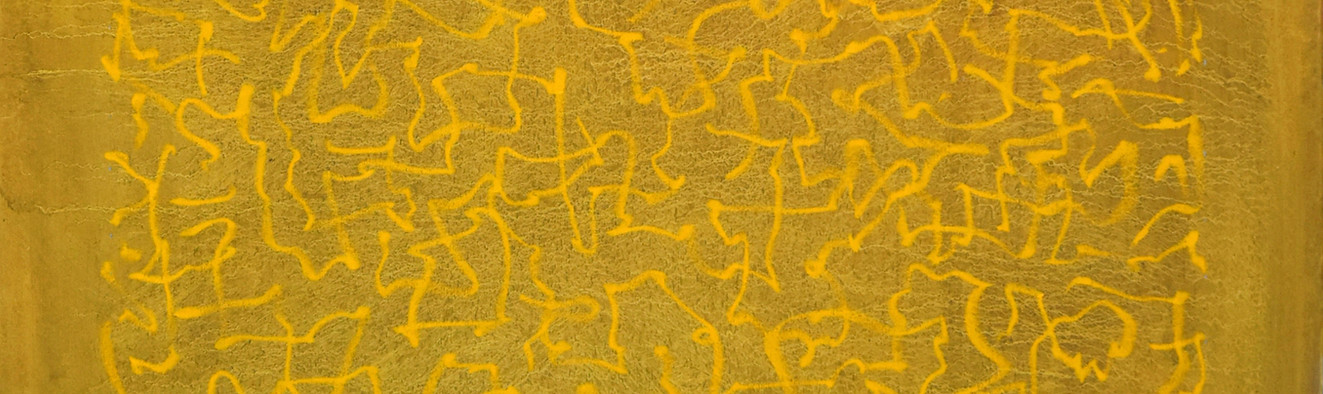
Painting offers a way of investigating aspects of human experience that resist language. My recent practice is centred on examining the question: What are the forces that animate us and give us life?
Rather than seeking answers through representation or narrative, I use abstraction as a way to explore the relationship between consciousness, emotion, perception, environment, and the ways these shape our experience of the world.
Although every work begins with a similar intention, the painting continually presents new conditions to which I respond. It is this evolving dialogue that gives each work its own character.
Each work emerges as the evidence of that encounter between the experience of being alive and the tangible world around us, revealed through the evolving act of painting.
I try to channel the changing dialogue between my perception, my emotional and physical state, and the intuition that accompanies each act of mark-making.
Decisions emerge in response to the painting as it unfolds, allowing each work to reveal relationships that could not have been anticipated in advance.
Whilst language enables us to describe the world with precision, some of the most significant aspects of human experience remain resistant to explanation: the subtle and not so subtle currents that shape our experience of being alive.
Painting is a way for me to remain present to that constantly changing relationship: the dialogue between our inner lives and the world around us.
The paintings are not intended to explain experience, but to embody it; making permanent the signatures of fleeting moments; creating a record that might otherwise pass unnoticed.
The paintings do not offer fixed interpretations. They ideally create a space in which viewers may recognise something of their own experience—and, perhaps, their connection to something beyond themselves.